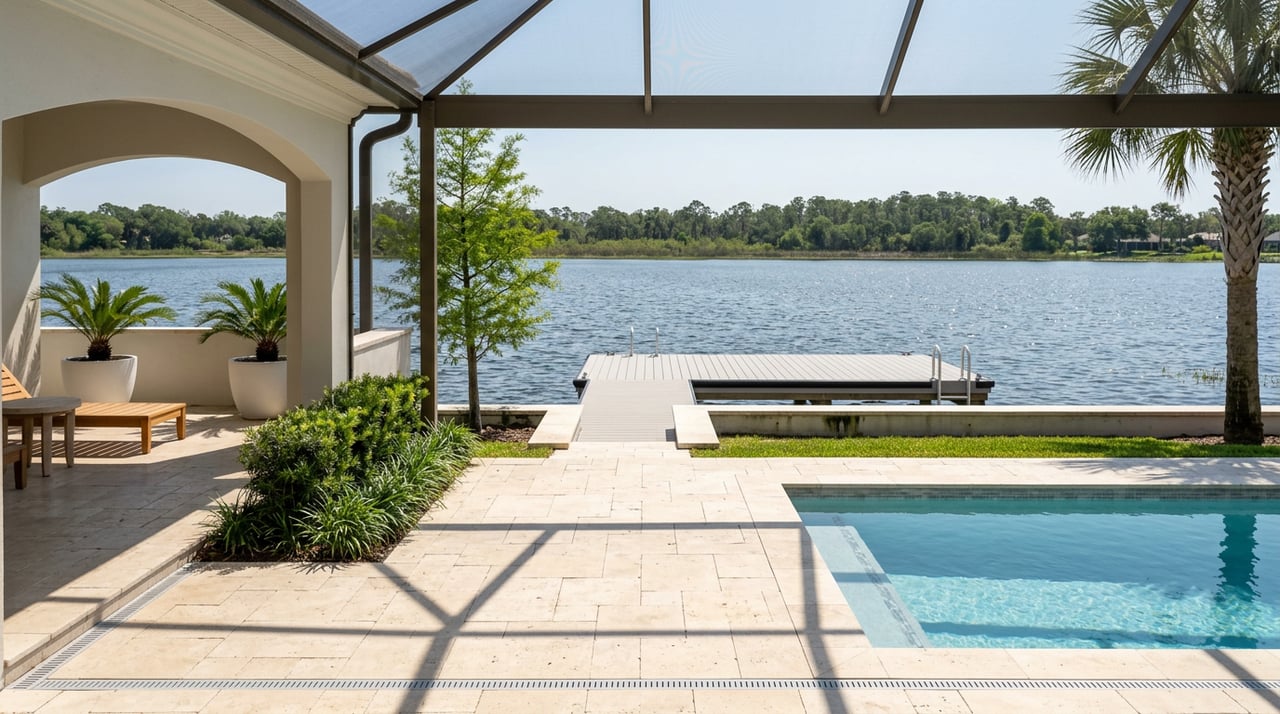
If your ideal morning starts with quiet water and a coffee on the dock, a lakefront home in Dr. Phillips can be a smart, lifestyle‑rich move. The challenge is knowing how to separate a postcard view from a strong, well‑permitted property with lasting value. You want confidence on docks, depth, flood risk, and what each lake actually offers before you write an offer. In this guide, you’ll learn how to assess shoreline types, permits, boating access, and the real value drivers for Dr. Phillips lakefront homes. Let’s dive in.
Know your Dr. Phillips lakes
Dr. Phillips sits in southwest Orange County with lake access that appeals to both leisure boaters and luxury buyers. You will see two primary patterns:
- Sand Lakes: Big Sand and Little Sand, with nearby Spring and Lake Serene, offer scenic views and neighborhood convenience.
- Butler Chain adjacency: Select streets and enclaves provide canal or direct access to the Butler Chain, including Lake Tibet and Lake Sheen.
Why this matters: the Butler Chain is a protected, interconnected system of 13 lakes covering more than 5,000 acres. It has active navigation rules, patrol, and higher water‑quality expectations. If you want frequent boating on large, connected water, review the Butler Chain’s protections and governance using the Orange County Water Atlas overview of the Butler Chain of Lakes.
Waterfront value signals to watch
Not all water frontage is equal. Here are the factors that tend to move value:
- View plane: wide, open‑water panoramas typically command more than narrow canal views.
- Frontage length: more linear feet often supports higher land value and better dock options.
- Dock and lift: permitted structures, capacity, and condition matter to appraisers and buyers.
- Water depth and access: reliable depth at low water and a clear route to open water reduce risk.
- Orientation and privacy: corner coves or buffered lots can improve day‑to‑day enjoyment.
Independent valuation studies show that waterfront premiums vary widely by waterbody size, access, view, and amenities. Some properties see modest uplifts, while high‑amenity, deep‑water frontage can command very large premiums. For background on how and why these premiums fluctuate, review the literature summary on waterfront valuation drivers.
Shorelines and what each means
You will see several shoreline types in Dr. Phillips. Each carries different maintenance and permitting considerations.
Natural or vegetated edges
These shorelines use native trees and grasses with a gradual slope. They are habitat‑friendly and often lower maintenance. If stabilization is needed, a living shoreline approach can be both effective and permit‑efficient. Florida allows a streamlined path for many small living shoreline projects, but you should still obtain verification or authorization. See homeowner guidance on permitting and design through UF/IFAS’s overview of living shorelines and DEP verification.
Riprap or revetment
Rock armoring reduces erosion and can be appropriate in certain settings. Inspect for settling or undermining. Ask for any permits and age of installation. Florida Sea Grant offers a clear comparison of these approaches in its guide to living shorelines and shoreline trade‑offs.
Seawalls or bulkheads
Vertical concrete or stone walls create a crisp edge and protect lawns, but they require careful inspection. Look for cracking, movement at the base, rusting reinforcement, or patched sections. Replacement typically requires permits and can be costly. A marine contractor can outline scope and expected costs; review this practical overview of dock and seawall construction considerations.
Living shorelines
Bioengineered solutions use plantings and low structural elements to absorb wave energy and improve habitat. When feasible, they can reduce long‑term maintenance and may qualify for streamlined review. UF/IFAS explains homeowner options in its living shoreline permitting guide.
Sand Lakes depth note
Along the Sand Lakes, seasonal water‑level changes and shallower margins can require longer docks and may limit boat draft at low water. Always confirm dock length relative to low water and request recent depth measurements.
Dock, lift and access checks
A great view is not enough. Confirm the following on site or through specialists:
- Structure and permits: identify shoreline type, dock age, and visible condition; request copies of dock, lift, and seawall permits. A marine contractor can assess structure and electrical on the dock. See contractor guidance on dock construction and permitting basics.
- Depth and approach: obtain a low‑water depth measurement at the berth and verify a safe, usable channel to open water.
- Aquatic vegetation: check for heavy weed growth or recurring algae and ask whether the HOA or county coordinates control. Review regional context on water quality and governance on the Butler Chain of Lakes.
- Drainage and elevation: walk the lot after rain if possible. Identify low areas near patios, pool equipment, or screen enclosures. Cross‑check flood zones on FEMA’s Flood Map Service Center.
- Utilities: confirm central sewer service and note any special wastewater setups on older parcels.
Who permits what
Waterfront work can involve multiple layers. Plan ahead and collect documentation before you close.
- Florida DEP: regulates work affecting sovereign submerged lands and water‑dependent activities. Some small projects may qualify for exemptions or expedited paths but still require agency verification. See UF/IFAS on DEP verification and living shoreline options.
- Water Management District: parts of Orange County fall under the St. Johns River Water Management District; surface water or wetland impacts may require district review.
- U.S. Army Corps of Engineers: dredging and certain activities in navigable waters trigger federal permits. The UF/IFAS guidance above outlines when Corps review can apply.
- Local government: Orange County enforces building codes, dock setbacks, electrical standards, and inspections. On the Butler Chain, advisory boards and navigation districts coordinate canal maintenance and patrol. See local governance context on the Butler Chain of Lakes.
Boating rules and special protections
The Butler Chain carries the Outstanding Florida Waters designation, which adds scrutiny to activities that could degrade water quality or habitat. You can confirm this designation in the Florida Administrative Code listing of Outstanding Florida Waters. Expect defined rules for dock footprints, shoreline work, and navigation.
Florida Fish and Wildlife Conservation Commission (FWC) enforces statewide boating safety requirements and supports local no‑wake and restricted areas for safety and resource protection. Review current guidance from FWC on boating rules and safety requirements and always check local signage before frequent, high‑speed use.
Flood and insurance realities
Even on lakes, flood risk matters. Start with FEMA’s parcel‑level maps and request an elevation certificate if the home is near a Special Flood Hazard Area. You can review official maps at FEMA’s Flood Map Service Center. If a property is in the SFHA and you use a federally backed mortgage, flood insurance will likely be required.
Premiums changed under FEMA’s Risk Rating 2.0, which prices risk more precisely by property characteristics like elevation and distance to water. Rates can vary across Florida and even within a neighborhood. Ask for written quotes for the exact address from both NFIP and private carriers, and confirm whether an elevation certificate exists. For a helpful primer on rate factors and Florida dynamics, see this flood insurance overview.
How costs affect offer and appraisal
Inspectors and appraisers consider seawall age, dock condition, depth, and any recurring vegetation issues. If a seawall shows distress or a dock needs rebuilding to current code, get written estimates during your inspection period. Replacement or major repair costs can range from several thousand to many tens of thousands of dollars depending on length, access, and materials. For scope context, review common elements in this dock and seawall construction guide.
A practical due‑diligence checklist
Request these items with your offer or immediately after going under contract:
- Survey showing lake frontage and any recorded easements. Confirm dock ownership and that structures sit within the riparian corridor. See UF/IFAS on riparian and permitting basics.
- Copies of permits and authorizations for the dock, lift, and any seawall from county, state, and federal agencies.
- Recent depth measurements at low water plus notes on approach constraints, turning radius, and bridge or clearance limits.
- A marine contractor’s inspection and written cost estimate for dock and seawall repairs. Use a specialist familiar with Florida dock and seawall standards.
- FEMA FIRM panel confirmation and an elevation certificate to obtain accurate flood quotes. Start at FEMA’s Flood Map Service Center.
- HOA documents for any shared docks, ramps, or seawalls, including weed control responsibilities and special assessments.
- Maintenance logs and invoices for lifts, pumps, and shoreline work, plus records showing that past work was permitted.
Where inventory clusters
If you are mapping a showing day, target streets and enclaves that regularly produce lakefront or canal‑front listings. In Dr. Phillips, that often includes Bay Hill and Bay Hill Cove, Phillips Landing, Vizcaya, Sand Lake Point, Sand Lake Cove, Naples Cay, Cypress Point and Cypress Trace, Kilgore Road, and Point Cypress Drive. Each pocket has different frontage types and access, so match your shortlist to your boating goals.
How to compare two lake homes
Use this quick side‑by‑side:
- Water access: direct open water, canal, or community dock only?
- Depth: documented low‑water sounding at the berth and along the route to open water.
- Dock and lift: age, permit history, electrical condition, lift capacity, and repair estimates.
- Shoreline: natural edge, riprap, seawall, or living shoreline, plus any active erosion.
- Flood and insurance: FIRM zone, elevation certificate on file, and written NFIP and private quotes.
- Privacy and use: view width, prevailing winds, and potential noise from public ramps.
Ready to tour with confidence
The right Dr. Phillips lakefront home pairs your lifestyle with the practicals: verified depth, clean permits, a stable shoreline, and insurance you understand. With a clear framework and the right partners, you can move fast when the perfect waterfront hits the market. If you want a curated list of lake homes matched to your dock, depth, and boating goals, connect with Max Cawal for a private consultation.
FAQs
What makes the Butler Chain unique for Dr. Phillips buyers?
- It is a 13‑lake, 5,000‑plus acre connected system with patrol and special protections that shape dock permitting, water quality expectations, and boating access; see the Butler Chain overview.
How do you verify a dock was legally permitted?
- Ask for copies of county and state permits and any submerged‑lands authorizations, then have a marine contractor confirm the structure; UF/IFAS explains permit pathways in its homeowner guidance.
Do Dr. Phillips lakefront homes require flood insurance?
- If a property is in a Special Flood Hazard Area and you use a federally backed loan, insurance will likely be required; verify on FEMA’s Flood Map Service Center and get address‑specific quotes.
How much can seawall or dock repairs cost?
- Costs vary by length, access, and materials, ranging from several thousand to many tens of thousands of dollars; get written estimates and review common construction factors.
Are there special rules for boating on the Butler Chain?
- Yes, the chain has local patrol, defined navigation rules, and Outstanding Florida Waters protections; review FWC boating requirements and the Butler Chain governance.
Can you add a living shoreline instead of a seawall?
- In many cases yes, and some small projects can follow a streamlined DEP path with verification; see UF/IFAS on living shoreline permitting.